
Your Kid Has Online Friends. Help Them Make Real Ones.
Nobody comes over anymore. And you’re starting to wonder how to help your kid make friends who actually show up at the door.
Remember when your house was the house? Sneakers piled at the door. Kids raiding the fridge. Somebody always staying for dinner.
Now the house is quiet. Your kid is upstairs on a headset, laughing with three friends who live in three different cities. They call it hanging out. You’re not so sure.
If that sounds like your house, you’re not alone. Parents bring this up with me constantly. Not grades. Not playing time. Friends.
I’ve been running camps for over 25 years. I raised three boys through the group-chat era. Here’s what I’ve learned about why in-person friendships fade, and what brings them back.
Making Friends Is a Skill (and It Fades Without Reps)
We treat friendship like it just happens. It doesn’t. It’s a skill, like a jump shot or a defensive slide.
You walk up to someone new. You say something slightly awkward. You read their face. You recover. That’s a rep.
Online, however, kids skip all of it. They can mute, leave the chat, or hide behind a gamer tag. Nothing is at stake, so nothing gets built.
Skills fade without reps. A kid who hasn’t shot in three months loses their touch. A kid who hasn’t started a real conversation in three months loses that touch too.
Why “Just Invite Someone Over” Doesn’t Work
I tried this with my youngest, Nathan. “Why don’t you invite a friend over?” The answer was a shrug and, “We’re already talking.”
The headset felt like enough to him. It wasn’t enough to me. And pushing harder at home only made it a fight. The fix needed a different setting, not a louder parent.
How Teen Social Skills Actually Get Built
Social confidence doesn’t come from a lecture. It comes from being put in a room with no exit and no screen, and figuring it out.
Social psychologist Jonathan Haidt describes the shift every parent feels: we moved from a play-based childhood to a phone-based childhood. Play used to be where kids practiced conflict, compromise, and connection. Screens took the practice away.
In other words, the answer isn’t more talk about friends. It’s more chances to make them, face to face, with real stakes.
Discomfort Is the Training
Here’s the part that’s hard for us as parents. You can’t help your kid make friends by doing it for them. The awkward first hour is the point.
When your kid sits at a table full of strangers and has to break the silence, that’s growth. If we jump in to smooth it over, we steal the lesson.
What Happens at a Phone-Free Camp: Sunday to the Last Day
At Hoop Dreams, phones and tech stay home for the week. No exceptions. That’s the Digital Detox, and it’s the single biggest reason kids leave with real friends.
No screen to hide behind. No headset. No group chat. Just a cabin of Athletes who met that morning.
Here’s how the week usually plays out.
Sunday: Strangers
Sunday is awkward. Quiet meals. Lots of staring at shoes.
Most kids arrive knowing nobody. Some are nervous. A few are sure they made a mistake. That’s normal, and it passes faster than you’d think.
Tuesday: Saving Seats
By Tuesday, they’re saving each other seats. They’ve lost a scrimmage together, laughed at a counsellor’s terrible joke, and stayed up a little too late whispering in the cabin.
Shared struggle builds friendship fast. Grinding through a tough drill together does in two days what months of online gaming can’t.
The Last Day: Swapping Numbers
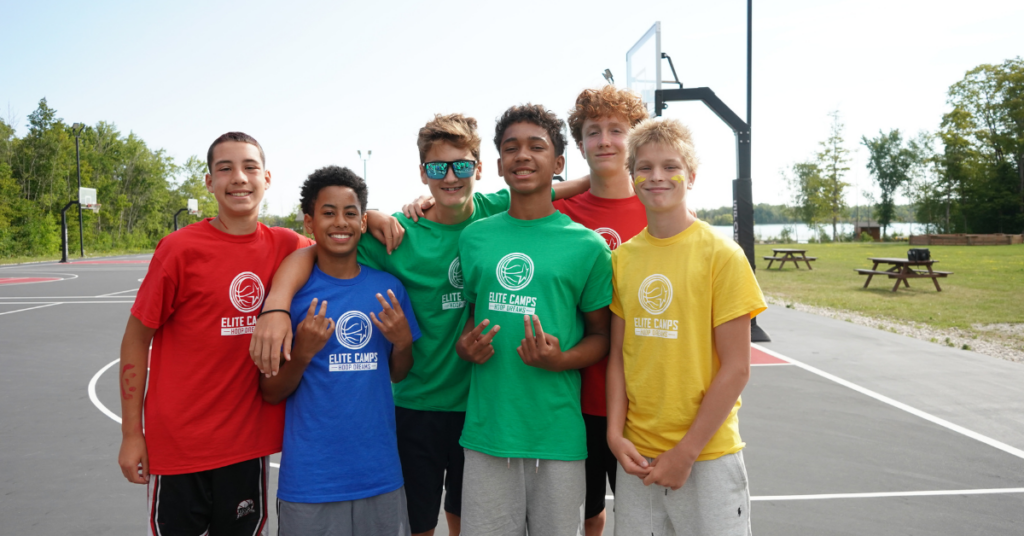
By the last day, they’re swapping numbers and planning next summer together. They arrive knowing nobody. They leave with camp friends.
For a lot of Campers, that’s the real win of the week.
Why an Overnight Basketball Camp in Ontario Works Better Than a Playdate
Think about it this way. A playdate is two hours. You’re in the next room. Your kid knows it ends at five.
An overnight basketball camp in Ontario is different. Your kid lives with the group. They eat together, compete together, and wind down together. There’s no parent to rescue them, and that’s exactly why it works. In my experience, it’s the fastest way I know to help your kid make friends that last.
A Clean Slate
Nobody at camp knows your kid as “the quiet one” or “the kid who games all weekend.” Every Athlete walks in equal.
I watched this with my own boys. The kid who was shy at school would come home from camp talking about friends I’d never heard of. New setting, new kid. That confidence followed him back into the school hallway.
Basketball Helps Kids Make Friends Faster
Kids who struggle with small talk don’t have to start from zero. The court is the icebreaker. A good pass, a big stop, a shared laugh after an airball, and the conversation starts itself.
That’s why we pair the basketball with the lake, the campfire, and the cabin. Skill work by day. Friendship by night. You can see the setup on our camp facilities page or take the virtual camp tour.
How to Help Your Kid Make Friends Before Summer Hits
You don’t have to wait until July to start. Here’s what I’d tell any parent sitting next to me in the stands.
- Name it without shaming it. “I’ve noticed nobody’s been over lately. How are you feeling about your friends?” Then listen.
- Create low-stakes reps. Open gym, a pickup game at the park, a carpool with a teammate. Small reps count.
- Protect screen-free time at home. Dinner without phones is a start. Model it yourself.
- Plan the big rep. A week away with no phone is the fastest reset I know. Pick the right program: Youth Camp for ages 10 to 13, Teen Camp for 13 to 16, or Girls Camp for both age groups.
The Bottom Line: Help Your Kid Make Friends Face to Face
Your kid isn’t broken because nobody comes over. They’re out of practice. Making friends in person is a skill, and skills come back with reps.
Give them a week with no screen, a cabin full of strangers, and a court to share. Sunday will be awkward. By the last day, they’ll have friends they plan their summer around.
Summer 2027 super early bird pricing is $1,450 a week (+HST). Regular is $1,650.
See 2027 Rates and Dates and give your kid the week that brings their friends back.